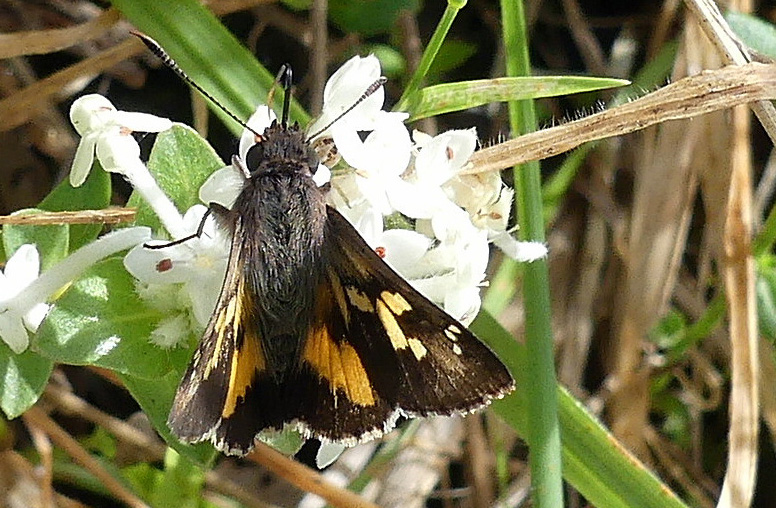
Montane Ochre, Trapezites phigalioides, showing upper side of wings.
Photo: Mez Woodward
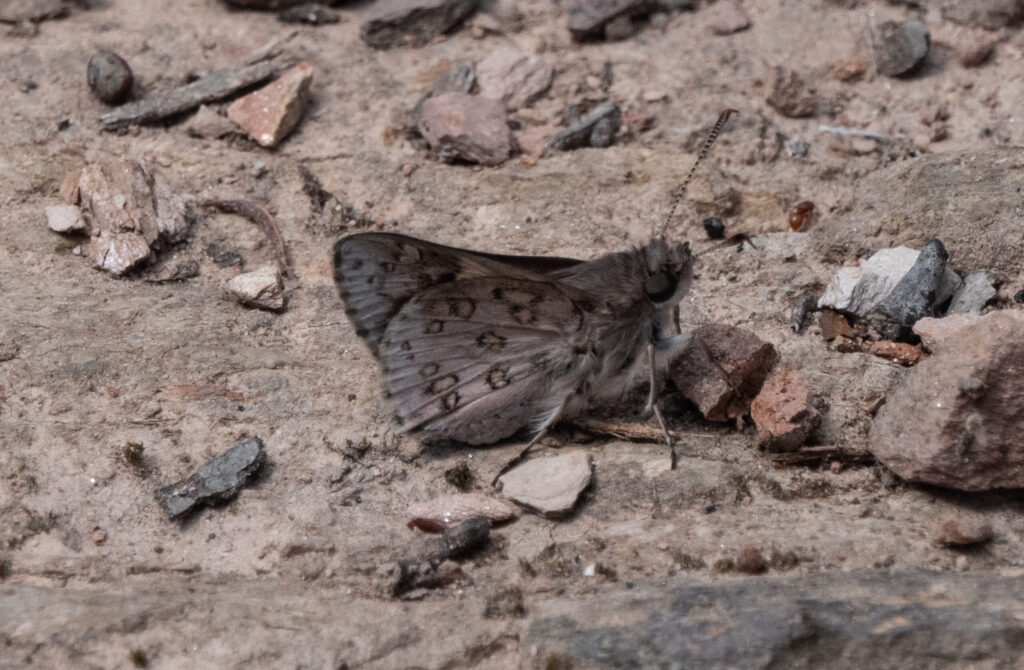
Montane Ochre, Trapezites phigalioides, showing under side of wings.
Photo: Euan Moore
Scientific Name: Trapezites phigaloides
Family of Butterflies: Hesperiidae (skippers)
Other Common Names: Phigaloides Skipper
Wingspan: 30mm, males and females are similar size.
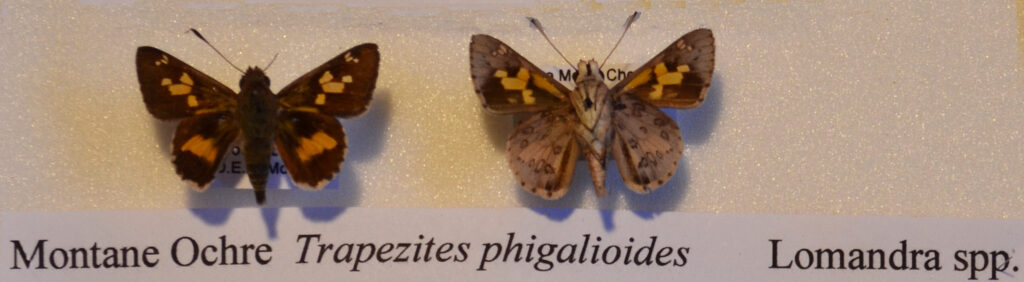
Museum specimens. Photo: Tony Morton
Note 1: The butterflies shown are both male. The upper side of the butterfly wings is shown on the left and the underside side of the butterfly wings is shown on the right.
Note 2: The plant name refer to the plant upon which the butterfly larvae (caterpillars) feed.
Local Records: There are local records for this species on Atlas of Living Australia and on iNaturalist. These records are mainly in higher areas to the south of Castlemaine such as Fryers Ridge and near Glenlyon. Tony Morton recorded this species in the Castlemaine area on a number of occasions.
| Tony Morton’s records of Montane Ochre from the local area (between 2000 to 2013): Eleven | ||
|---|---|---|
| Date | Location | Notes |
| 24-Nov-2012 | Garden, Fryerstown | |
| 30-Oct-2012 | The Monk, Chewton | |
| 15-Nov-2011 | The Monk, Chewton | |
| 1-Nov-2006 | The Monk, Chewton | |
| 16-Nov-2004 | Kalimna Park, Castlemaine, Vic. | |
| 15-Dec-2002 | The Monk, Chewton | |
| 9-Dec-2000 | The Monk, Chewton | |
| 4-Dec-2000 | Irishtown Track, Irishtown | Possibly near the 2021 record on Fryers Ridge. See iNaturalist |
| 25-Nov-2000 | Rotunda, Kalimna Park | |
| 21-Nov-2000 | Track, 2k. E. Vaughan | |
| 14-Nov-2000 | The Monk, Chewton | |
Distribution outside our region: There are quite a few records for the Macedon Ranges. Further afield there are records for this species across much of central and eastern Victoria, particularly in higher and moister areas such as the Dandenong and Macedon Ranges and slopes of the Great Dividing Range. There are also records from the Otways and Grampians.
Larval Host Plants: Wattle Mat Rush (Lomandra filiformis)
Larval association with ants: None.
Adult Flight Times in Victoria: Peak in November and December, but with adults observed in Victoria from October to February.
Conservation Status:
- The Action plan for Australian Butterflies: Vulnerable in Australia
Other Notes: Probably uncommon in the Mount Alexander Shire. The local area near the edge of the Montane Ochre’s distribution.
References and further reading:
Atlas of Living Australia – Trapezites phigaloides, Montane Ochre
iNaturalist Australia – Trapezites phigaloides, Montane Ochre
Braby, Michael F., Second edition 2016. The Complete Field Guide to Butterflies of Australia. CSIRO Publishing.
Field, Ross P., 2013. Butterflies: Identification and Life History. Museum Victoria.