You will, no doubt, have heard that Avian Influenza (H5N1 Bird Flu) has reached Australia and is already having an impact on some species.
The North Central Catchment Management Authority undertakes surveillance for bird Flu across our local catchments as part of State and National programs to protect people, industry and wildlife. They have provided the following information and resources to keep you informed and enable you to take actions which will help protect you, your animals and wildlife more generally and have asked us to pass this on to our members and supporters.
The key points are:
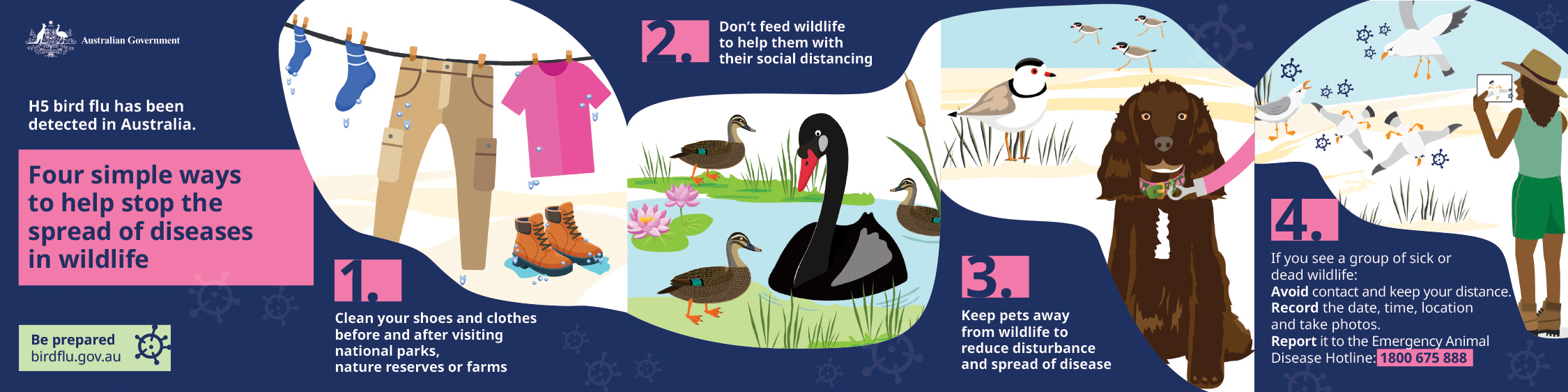
- AVOID contact with sick or dead birds
- RECORD the date, time, location and take a photo
- REPORT multiple dead birds or other animals to the Emergency Animal Disease Hotline 1800 675 888
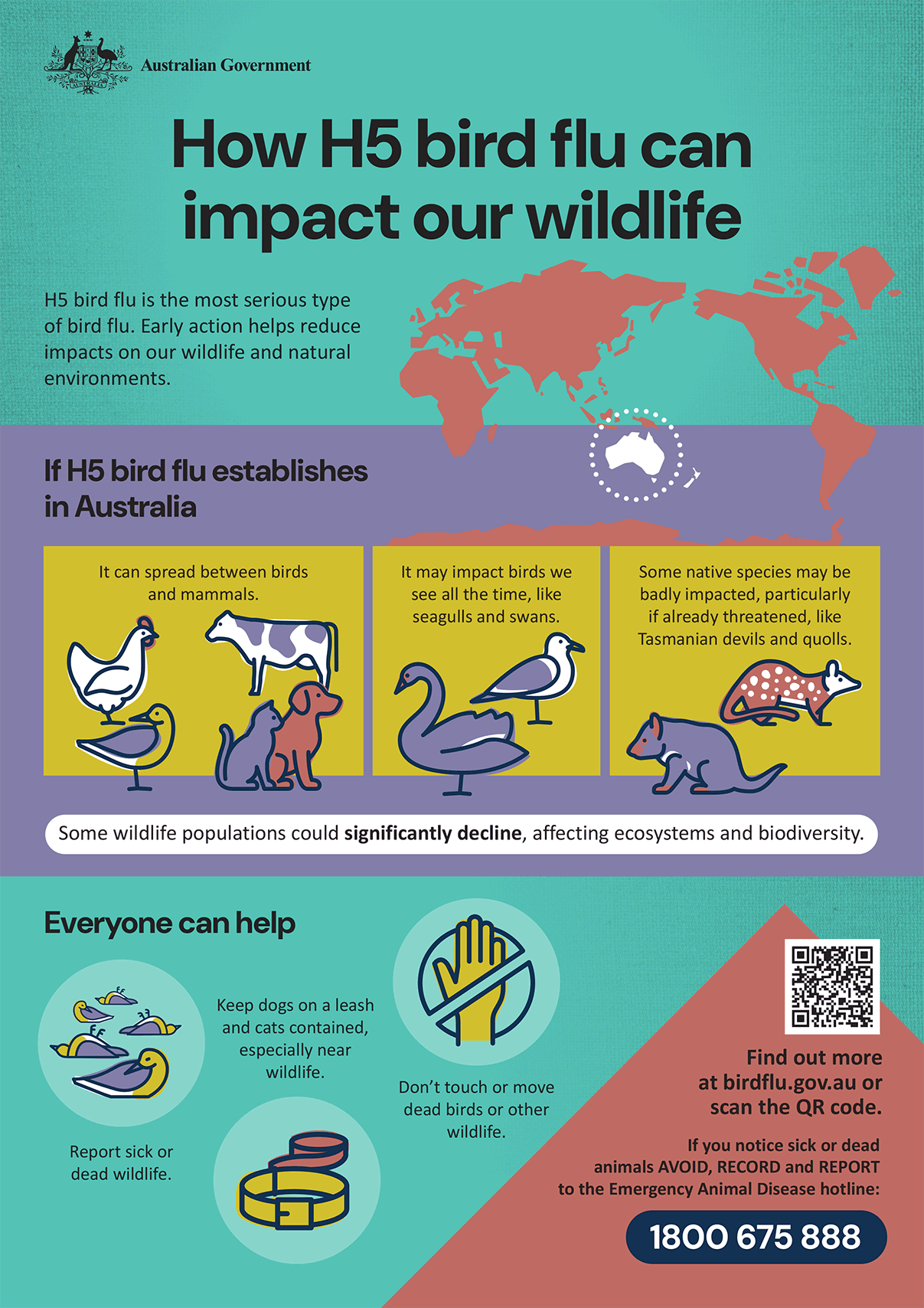
Bird Flu is not exclusive to birds. Internationally it has affected carnivorous mammals as well as some other species. Our native wildlife is at risk. It is important that we take steps to protect our native wildlife where possible. You can view this fact sheet and the 4 simple steps below.
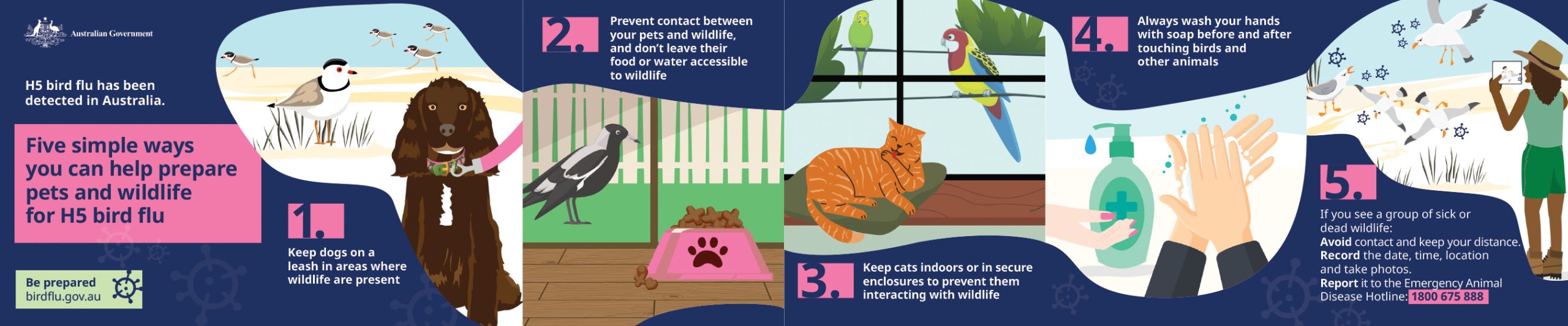
Your pets can also be infected but there are steps that you can take to help protect your pets.
You are encouraged to stay up to date using the links below as the situation may change rapidly. For the latest information on avian influenza, please visit:
Resources for Bird Flu (DAFF)
https://www.agriculture.gov.au/biosecurity-trade/pests-diseases-weeds/animal/avian-influenza/resources
H5N1 avian influenza (Agriculture Victoria)
H5N1 avian influenza | Poultry diseases | Animal diseases | Biosecurity | Agriculture Victoria
The following links are to two short videos which you are encouraged to watch.
What is Bird Flu?
What is bird flu_cc_July26
Bird Flu and You
Bird flu and you_cc_July26
If you observe any unusual wild bird deaths or signs of illness in birds, please avoid handling them, record the details and report your observations to the Emergency Animal Disease Hotline 1800 675 888.
Thank you for your ongoing support in helping protect our waterways and wildlife.