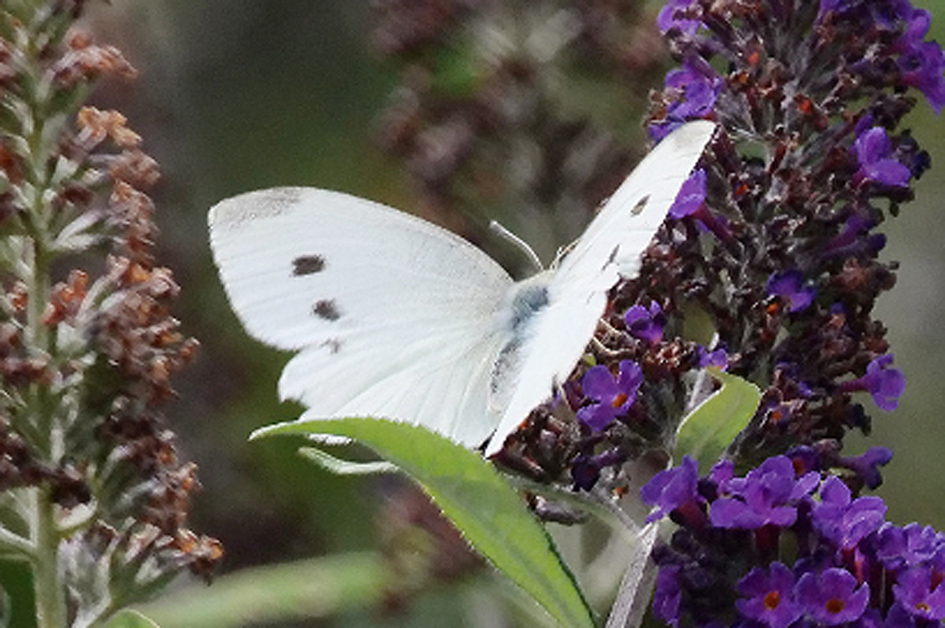
Cabbage White (female). Note: two black spots on forewing. Photos: Noel Young
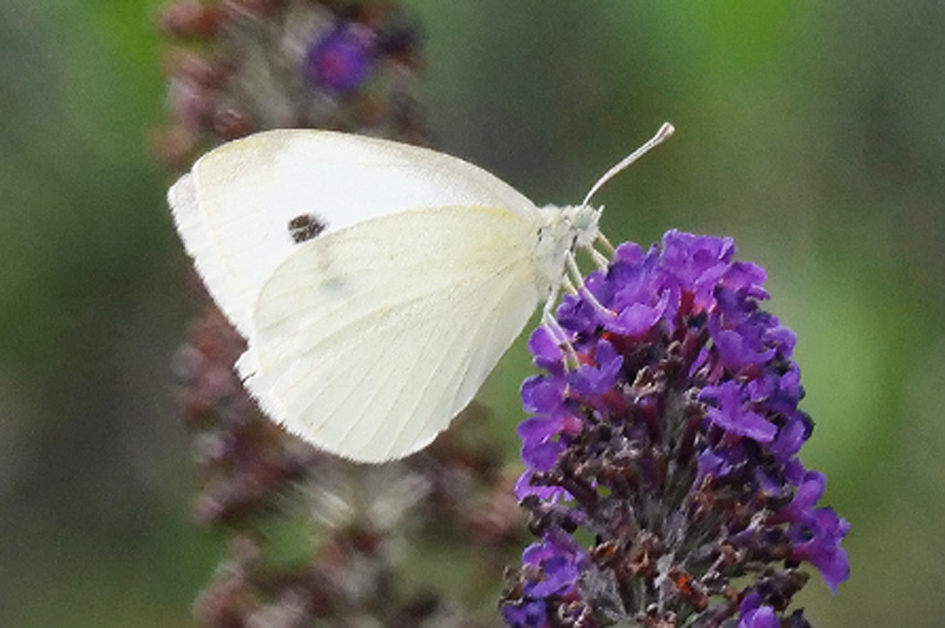
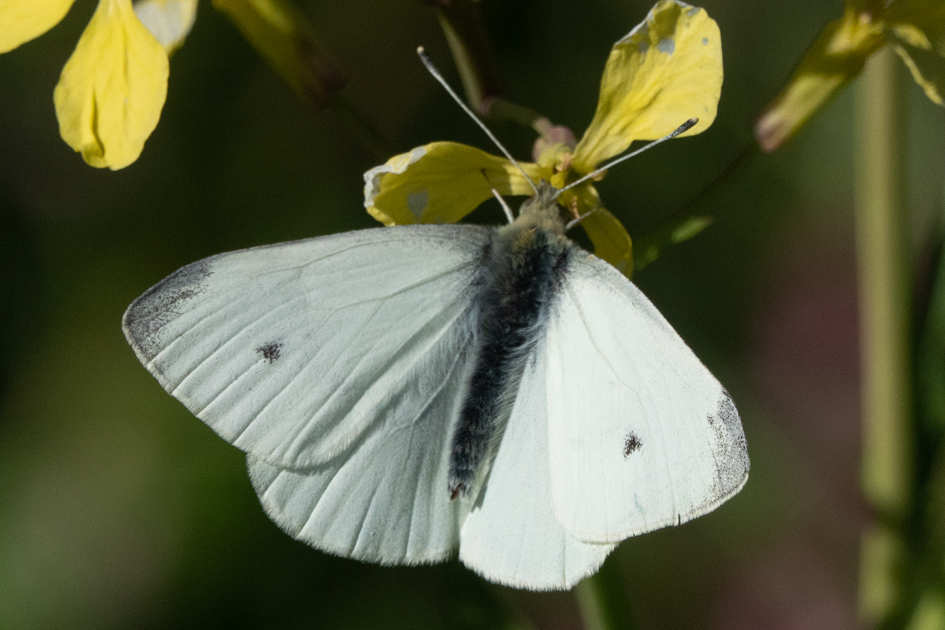
Cabbage White (male). There is a single black spot on forewing. Photos: Euan Moore
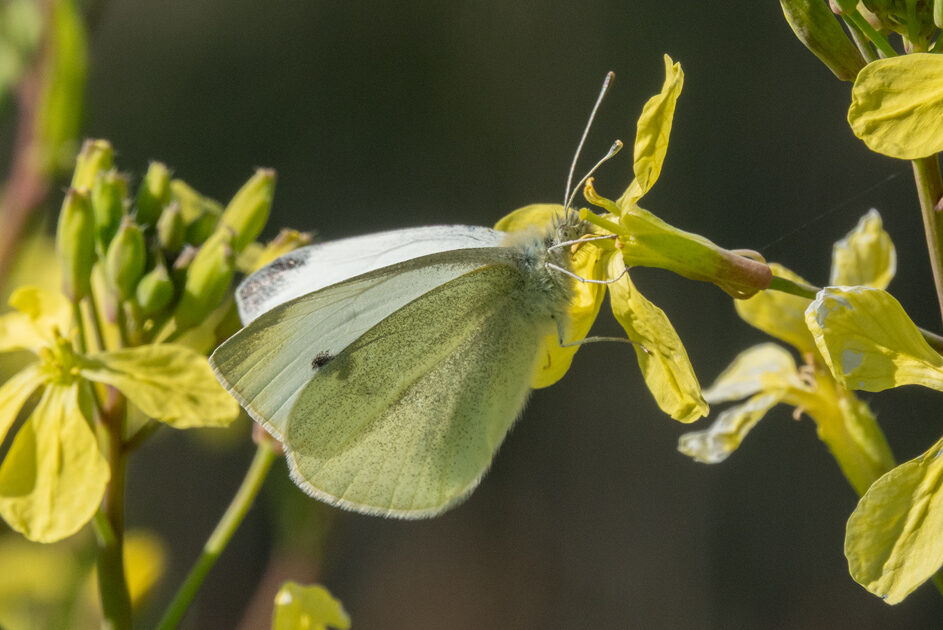
Scientific Name: Pieris rapae
Family of Butterflies: Pieridae (Whites and Yellows)
Other Common Names: Cabbage Butterfly, Small White.
Wingspan: 44mm (male and female)
Local Records: This is a common species frequently seen around gardens and weedy areas where its
food plants are found. Large numbers may be seen in the vicinity of canola crops. It is less common in areas dominated by native vegetation.
Distribution: This is an introduced species that was first recorded in Victoria in 1929. Since then it has
spread across the state and much of Australia. It probably originated in the eastern Mediterranean region of Europe but today is found across North America, Europe, much of Asia, Australia and New Zealand. It occurs wherever suitable food plants are found. The Australian distribution is shown by records in the Atlas of Living Australia where you can zoom in on the map to see Victorian and local distributions.
Larval Host Plants: Many members of the Brassicaceae including weed species such as wild
raddish, Raphanus raphanistrum, and economically important plants such as cabbage, broccoli,
cauliflower, turnip, canola and radish.
Adult Flight Times in Victoria: This species is active from August to June with peak activity from December to April Ref. Field. Across Australia, overall flight times are similar. Activity shown on iNaturalist is for the global population so is heavily biassed to the northern hemisphere summer months.
Conservation Status: Introduced
- The Action plan for Australian Butterflies: Not listed
Other Notes: This is an introduced pest species that can have economically significant impact on crops.
It is a declared pest species under the Plant Biosecurity Act 2010 (Victoria).
An introduced parasitic wasp, Cotesia glomerata, provides some biological control of Cabbage White
butterflies. When the wasp larvae emerge from the caterpillars, killing them in the process, they spin
small cocoons from which the adult wasp will later emerge. Leaving these cocoons to develop helps
provide some control for the following season. For small gardens, inspection for and physical removal of
the caterpillars will also provide a measure of control.
References and further reading:
Atlas of Living Australia – Pieris rapae, Cabbage White.
Gardening Australia Fact Sheets Series 25, Episode 32. Friends and Foes. Australian Broadcasting
Corporation, Oct 2014. (https://www.abc.net.au/gardening/factsheets/friends-and-foes/9436002).
iNaturalist – Pieris rapae, Cabbage White.
Braby, Michael F., Second edition 2016. The Complete Field Guide to Butterflies of Australia. CSIRO Publishing.
Field, Ross P., 2013. Butterflies: Identification and Life History. Museum Victoria.