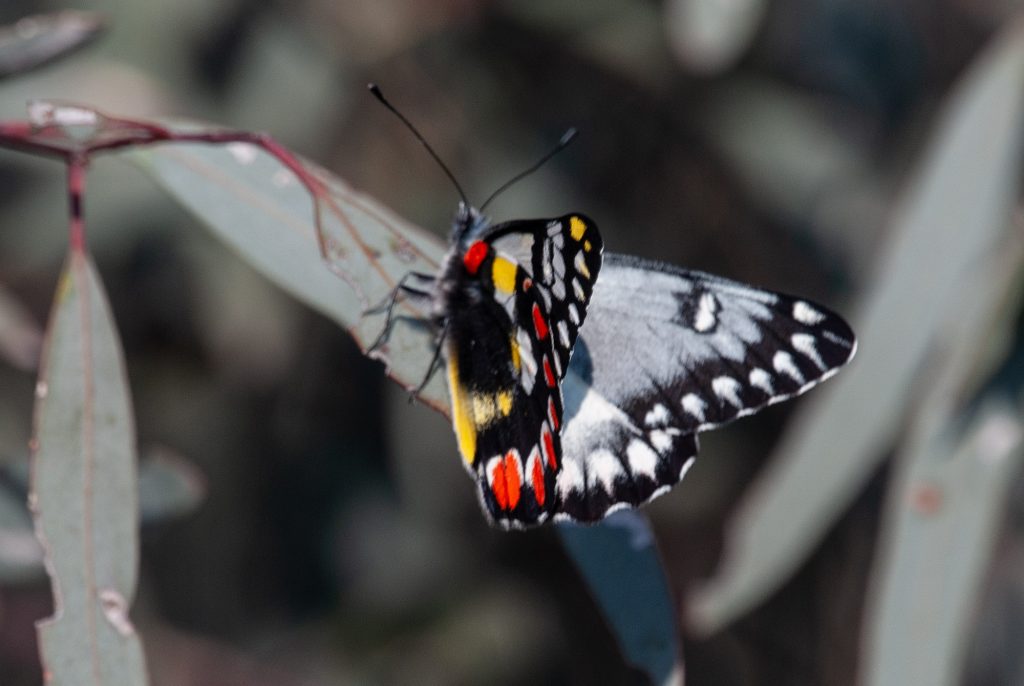
Red-spotted Jezebel (male) showing part of the upper wings. The male is pale grey on the upper forewing whereas the female is white.
Photo: Euan Moore
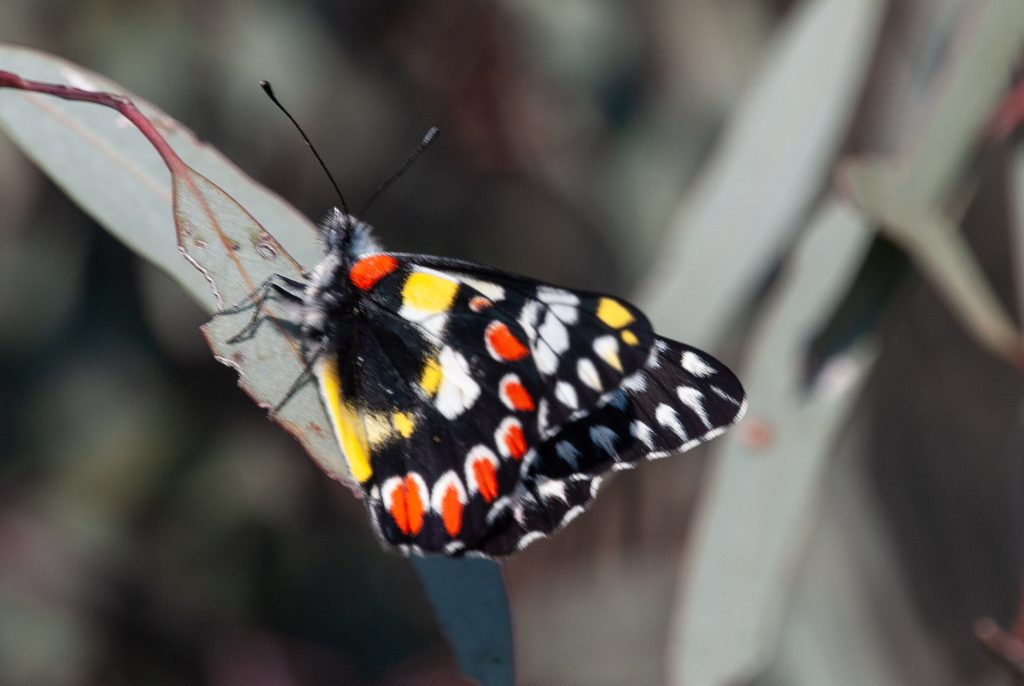
Red-spotted Jezebel (male) showing the under wings.
Photo: Euan Moore
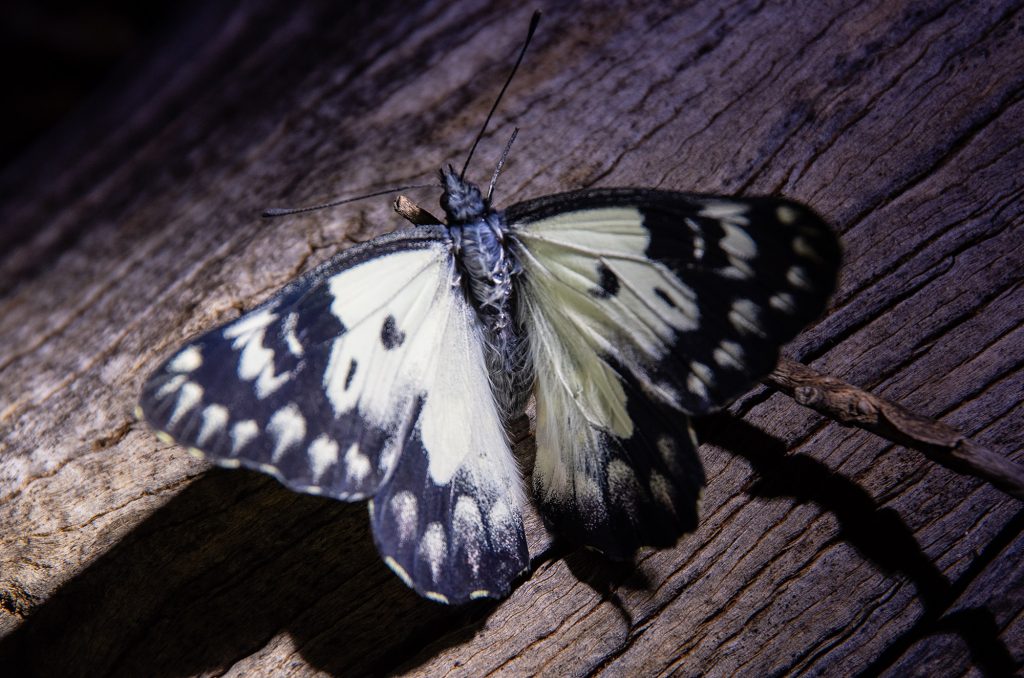
Red-spotted Jezebel (female). Note the two black marks on the white area of the upper side of the forewing (the male has no such marks).
Photo: Euan Moore
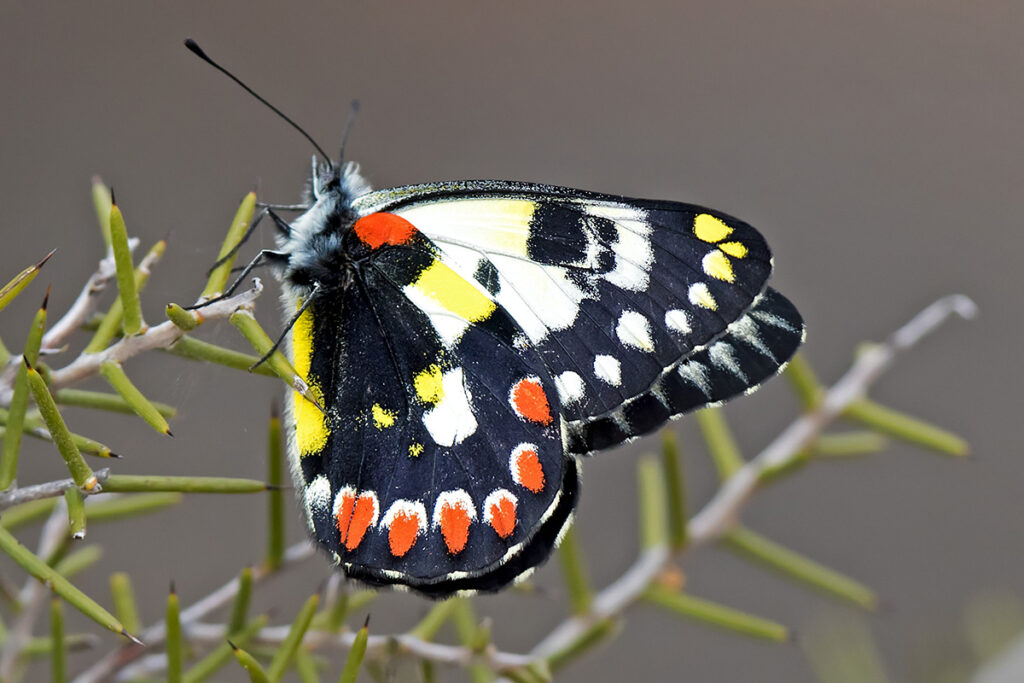
Red-spotted Jezebel (female) showing the under wings.
Photo: Albert Wright
Scientific Name: Delias aganippe
Family of Butterflies: Pieridae (Whites and Yellows)
Other Common Names: Wood White, Spotted Jezebel.
Wingspan: 61mm Male, 63mm Female.
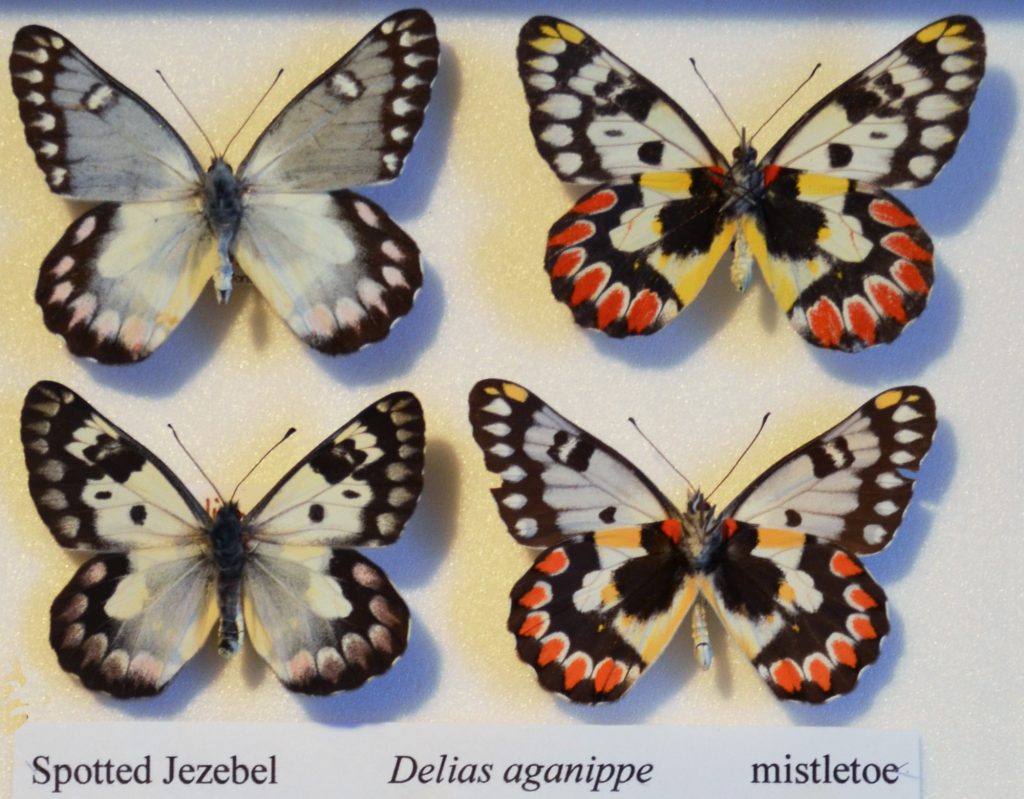
Red-spotted Jezebel, Upper wings left, lower wings right. Male (above) and Female (below). One of the host plants is mistletoe.
Museum specimens. Photo: Tony Morton.
Local Records: Prior to 2022 there were few local records in the Mount Alexander Shire. However this may have been due to under-reporting as this is a widespread and common species across much of Australia. More recently there have been records reported from across our region. see iNaturalist
Distribution: The Australian distribution is shown by records in the Atlas of Living Australia where you
can zoom in on the map to see Victorian and local distributions.
Larval Host Plants: Mistletoes (Amyema spp.), Ballarts (Exocarpos spp.), Quandongs and
Sandalwoods (Santalum spp.).
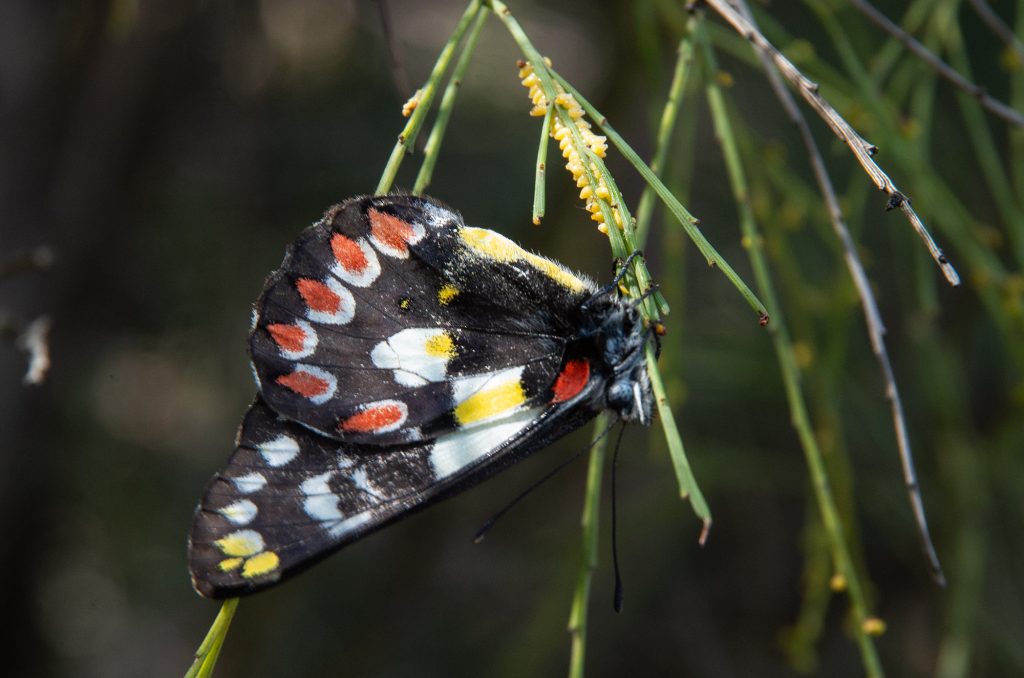
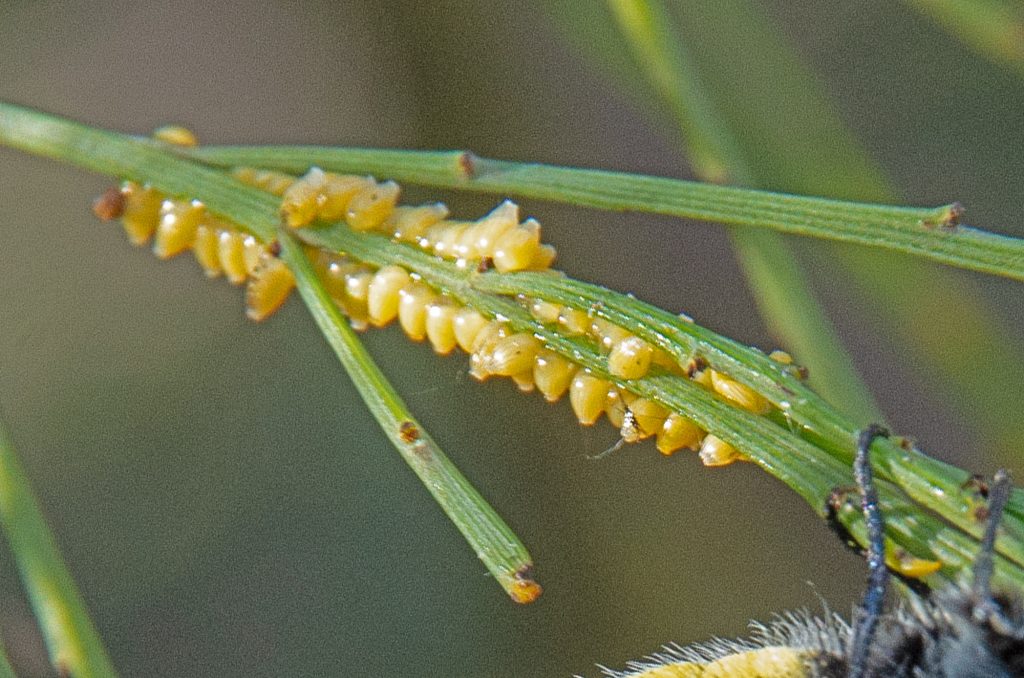
Female laying eggs on Broom Ballart, Exocarpos sparteus, and detail of the eggs.
Photos: Euan Moore
Larval association with ants: None
Adult Flight Times in Victoria: This species is most frequently seen in Victoria from December to March
with a peak in activity during January. Across Australia, there is a high level of activity from September
to March with the main peak being in January. Ref iNaturalist.
Conservation Status:
- The Action plan for Australian Butterflies: No Conservation Significance
- Flora and Fauna Guarantee Act 1988 – Threatened List 2021: Not Listed
Other Notes: These butterflies show some variation in wing markings with two distinct seasonal forms.
Males congregate on hilltops where they establish and defend territories. There are two generations
annually although dispersion and migration is not well understood.
References and further reading:
Atlas of Living Australia – Delias aganippe, Red-spotted Jezebel
iNaturalist – Delias aganippe, Red-spotted Jezebel.
Braby, Michael F., Second edition 2016. The Complete Field Guide to Butterflies of Australia. CSIRO Publishing
Field, Ross P., 2013. Butterflies: Identification and Life History. Museum Victoria