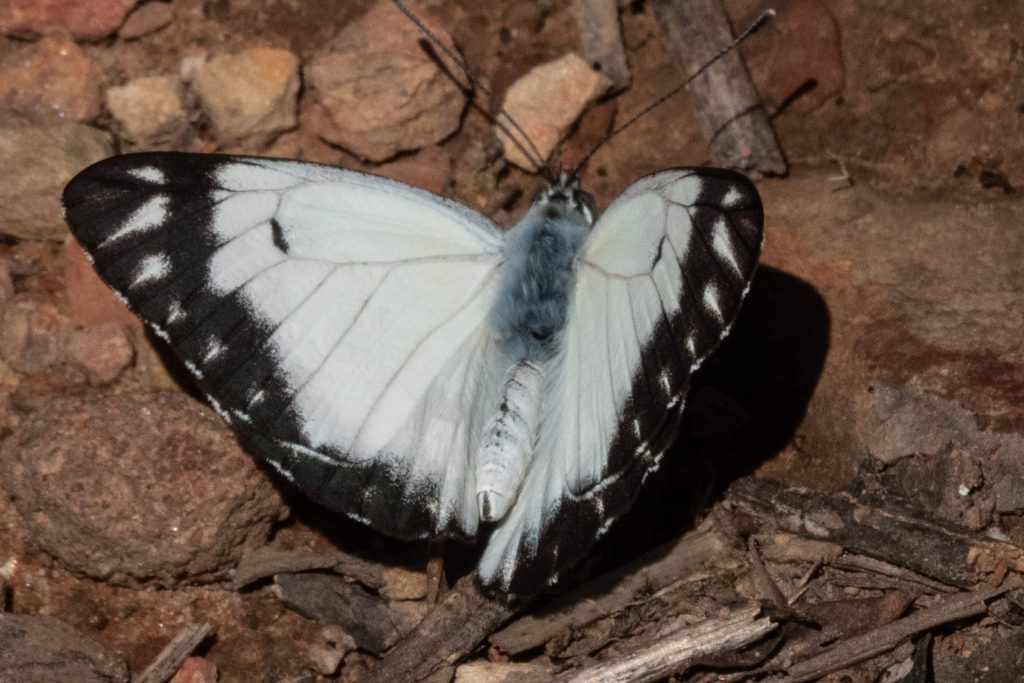
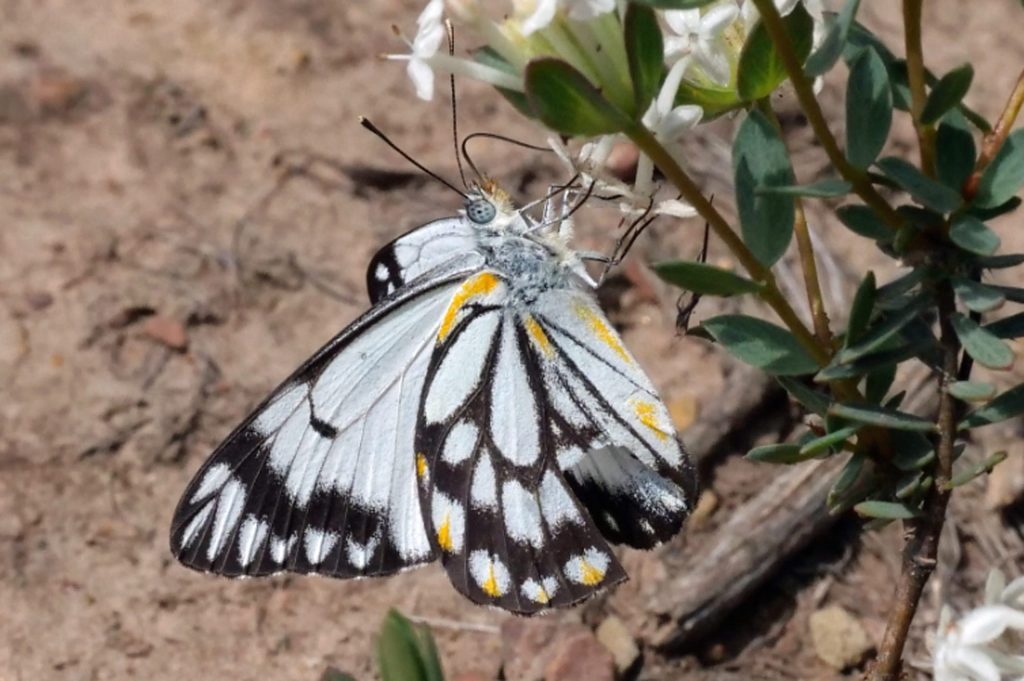
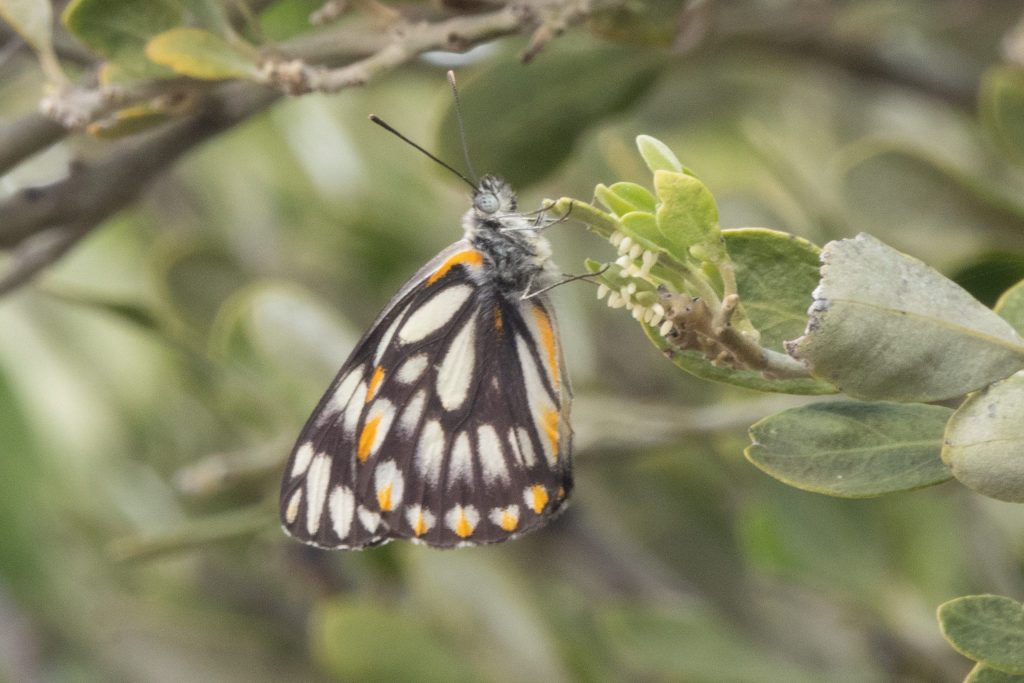
Caper White (male). Note: the small black mark on upper side of forewing (top) and small amounts of yellow on under-wings (below).
Photos: Upper – Euan Moore, Underside – Noel Young
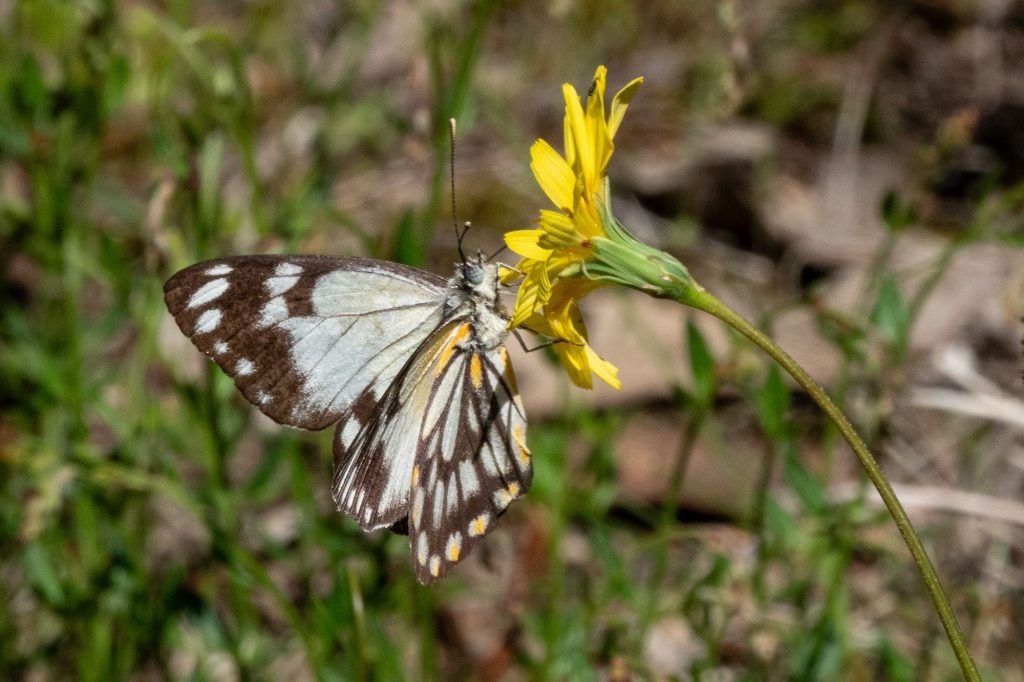
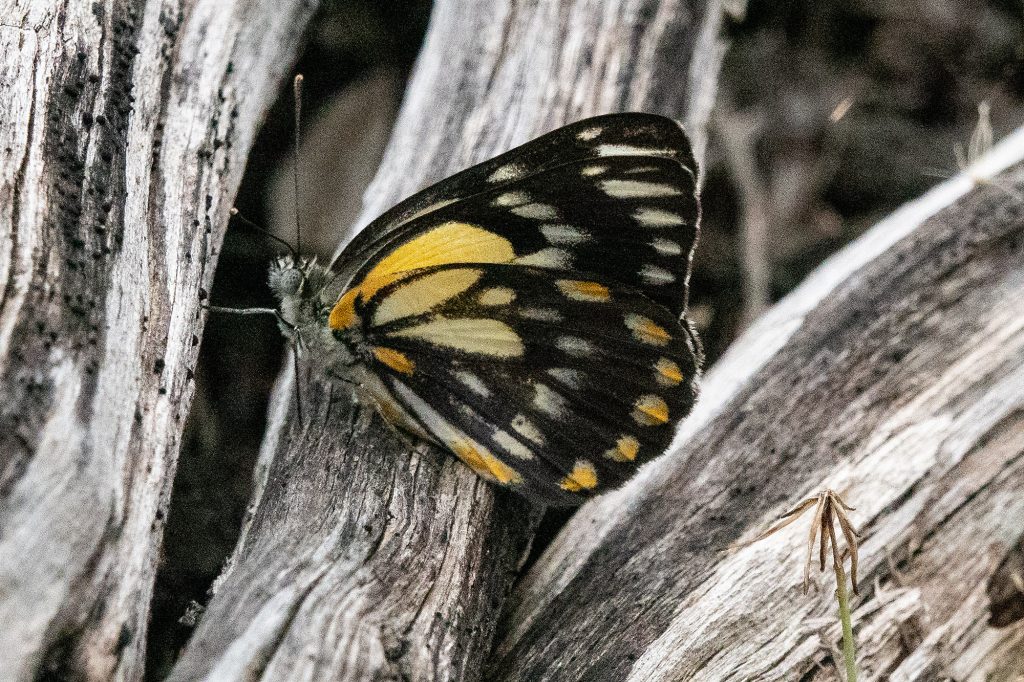
Caper White (female). Note: larger black mark from leading edge of the forewing creating a second partial row of white spots (top) and heavier black markings and yellow patches on under-wings (below).
Photos: Euan Moore
Scientific Name: Belenois java teutonia
Family of Butterflies: Pieridae (Whites and Yellows)
Other Common Names: Common White Butterfly
Local Records: This is a common migratory species that is seen in Victoria most years. Numbers may be particularly high following favorable conditions in their breeding grounds to the north and west of Victoria.
Distribution: The Australian distribution is shown by records in the Atlas of Living Australia where you can zoom in on the map to see Victorian and local distributions.
Female with eggs and the eggs on the leaves of Caper Bush, Capparis michellii, near Innamincka, South Australia.
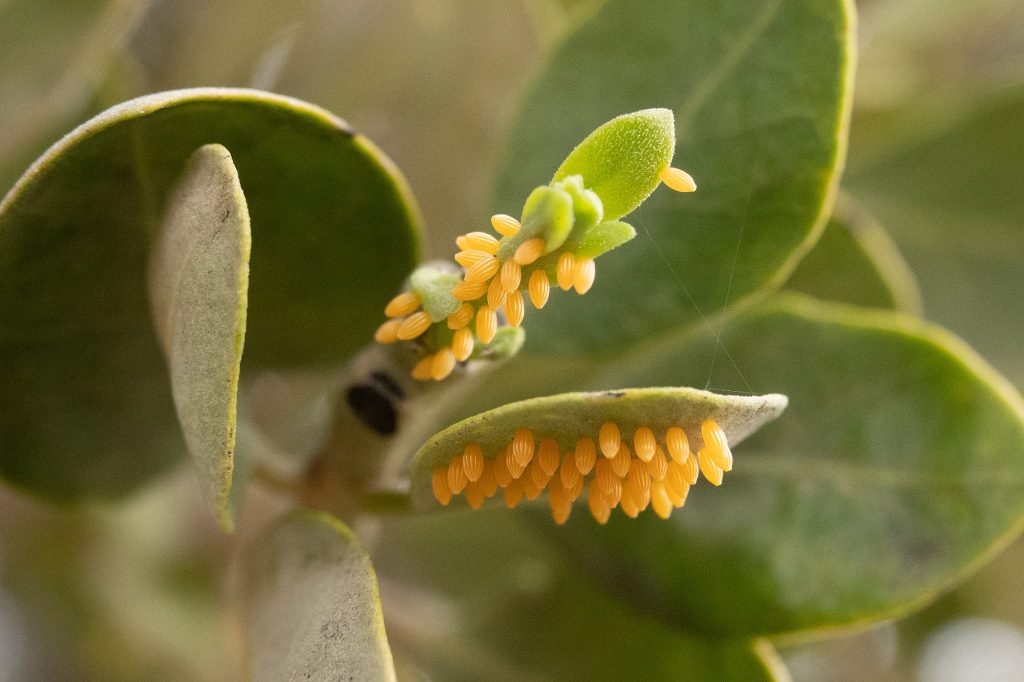
Photos: Euan Moore
Larval Host Plants: These are mainly members of the genus Capparis. The host plants do not occur naturally in Victoria with the closest natural breeding areas being in central to northern NSW and the Flinders Ranges in South Australia. In Victoria it may breed on ornamental plantings of Capparis sp.
Larval association with ants: None
Adult Flight Times in Victoria: This species is most frequently seen in Victoria during October and November. Across Australia, overall flight times are similarly October to November with a minor peak of activity from March through April. Ref: iNaturalist.
Conservation Status:
- The Action plan for Australian Butterflies: No Conservation Significance
- Flora and Fauna Guarantee Act 1988 – Threatened List 2021: Not Listed
Other Notes: This species can be quite variable in the amount of black and yellow on the wings. A dark form exists where the outer 50% of the underside of the wings may be black. Females also exhibit varying amounts of yellow on the underside of their wings ranging from yellow patches to having almost all the white areas replaced with yellow.
References and further reading:
Atlas of Living Australia – Belenois java, Caper White
iNaturalist Australia – Belenois java, Caper White
Braby, Michael F., Second edition 2016. The Complete Field Guide to Butterflies of Australia. CSIRO Publishing
Field, Ross P., 2013. Butterflies: Identification and Life History. Museum Victoria