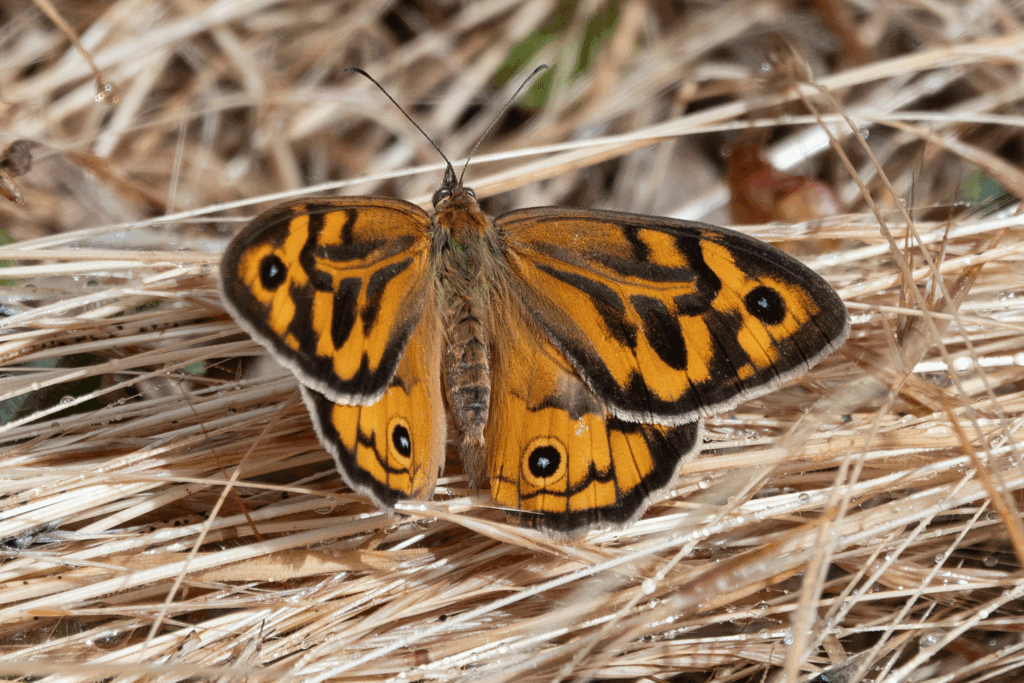
Common Brown, male, showing upper wing.
Photo: Euan Moore
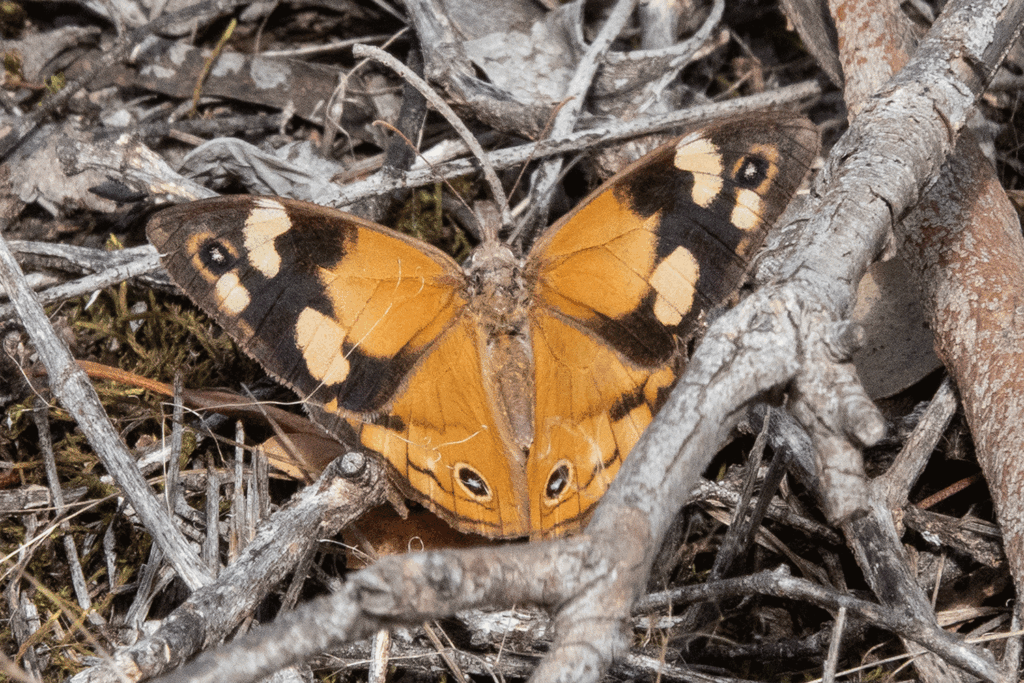
Common Brown, female, showing upper wing.
Photo: Euan Moore
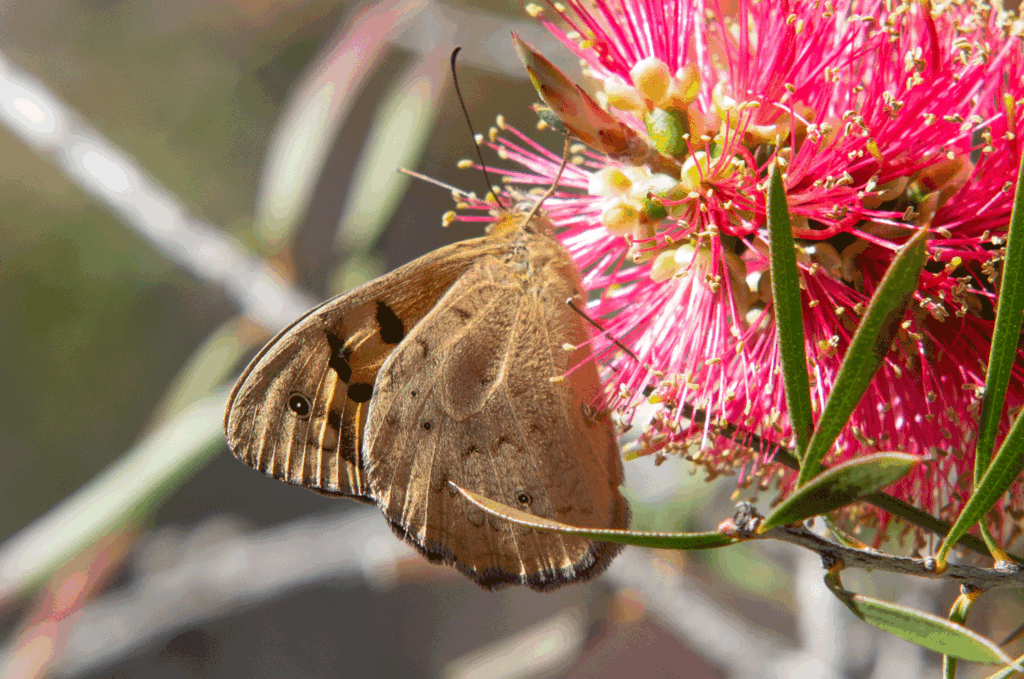
Common Brown, male, showing under wing.
Photo: Euan Moore
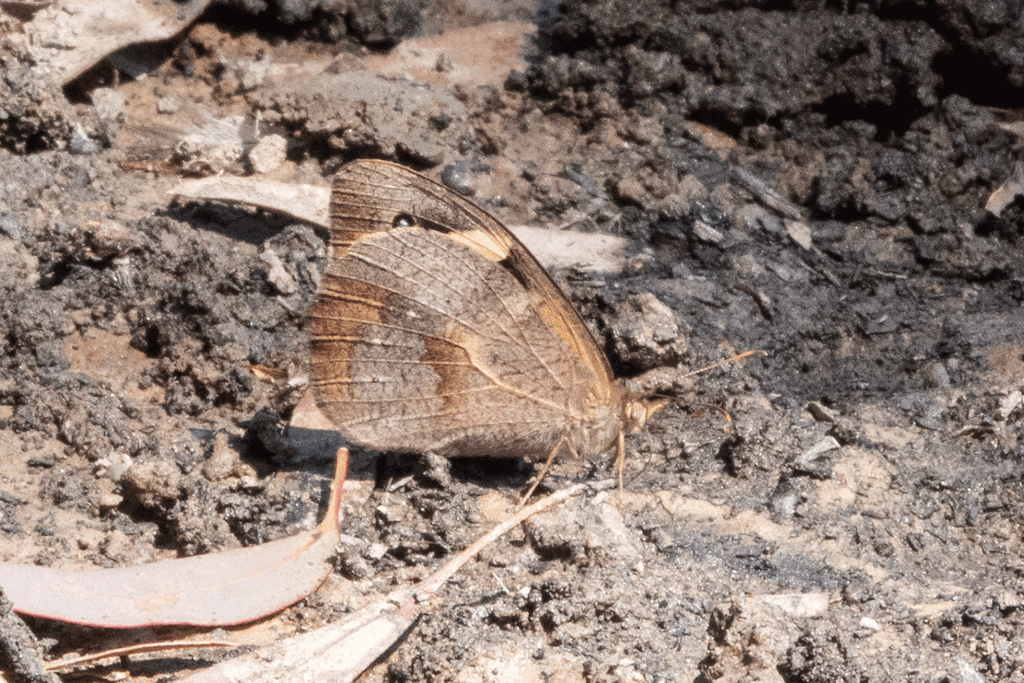
Common Brown, female, showing under wing.
Photo: Euan Moore
Scientific Name: Heteronympha merope subsp. merope
Other Common Names: None
Family of Butterflies: Nymphalidae (Browns and Nymphs)
Wingspan: 56mm males, 64mm females.
Local observations: This is one of the most common species in our area with numerous local records on
both iNaturalist and Atlas of Living Australia.
| Tony Morton’s records of Common Brown from the local area (between 2000 to 2013) | ||
|---|---|---|
| Date | Location | Notes |
| 1-Jan-2013 | Kalimna Park | beginning to cluster on bark of Eucalypts. |
| 30-Dec-2012 | Around Castlemaine | very numerous this year |
| 9-Nov-2012 | Vaughan garden | males begin to emerge (in Melbourne too) |
| 27-Mar-2012 | Kalimna Point | Many, as above, wings stuck to sap, bodies missing. Vespa germanica around. Also native bees |
| 24-Dec-2011 | Kalimna Point | many |
| 18-Nov-2011 | Kalimna Point | very plentiful |
| 7-Nov-2011 | Axe Creek, Dragonfire Castle | plentiful, mainly male |
| 15-Jan-2011 | Botanic Gardens, off Fromes Rd | |
| 5-Dec-2009 | Vaughan walk | several males 11.30 – 1.30p.m. |
| 20-Nov-2005 | Vaughan Garden | just emerged |
| 15-Dec-2002 | Green Gully Road, Glen Luce | |
| 15-Dec-2002 | The Monk, Chewton | |
| 16-Jan-2001 | Green Gully Rd. walk | |
| 10-Jan-2001 | Rotunda & Ridge, Kalimna Park | |
| 14-Nov-2000 | everywhere in forests | males begin to appear in numbers |
| 29-Feb-2000 | Vaughan walk | |
Distribution outside our region: This is a widespread species found across most of Victoria however it is
largely absent from the north-west of the state. Outside Victoria it is found in south-west WA, south
east SA, eastern NSW and south-east Queensland. It is also common across most of Tasmania.
Museum specimens. Photo: Tony Morton.
Note 1: The upper side of the male wings is shown on top and upper side of the female wings is shown on the bottom.
Note 2: The plant name on the bottom right refers to the plants upon which the butterfly larvae
(caterpillars) feed.
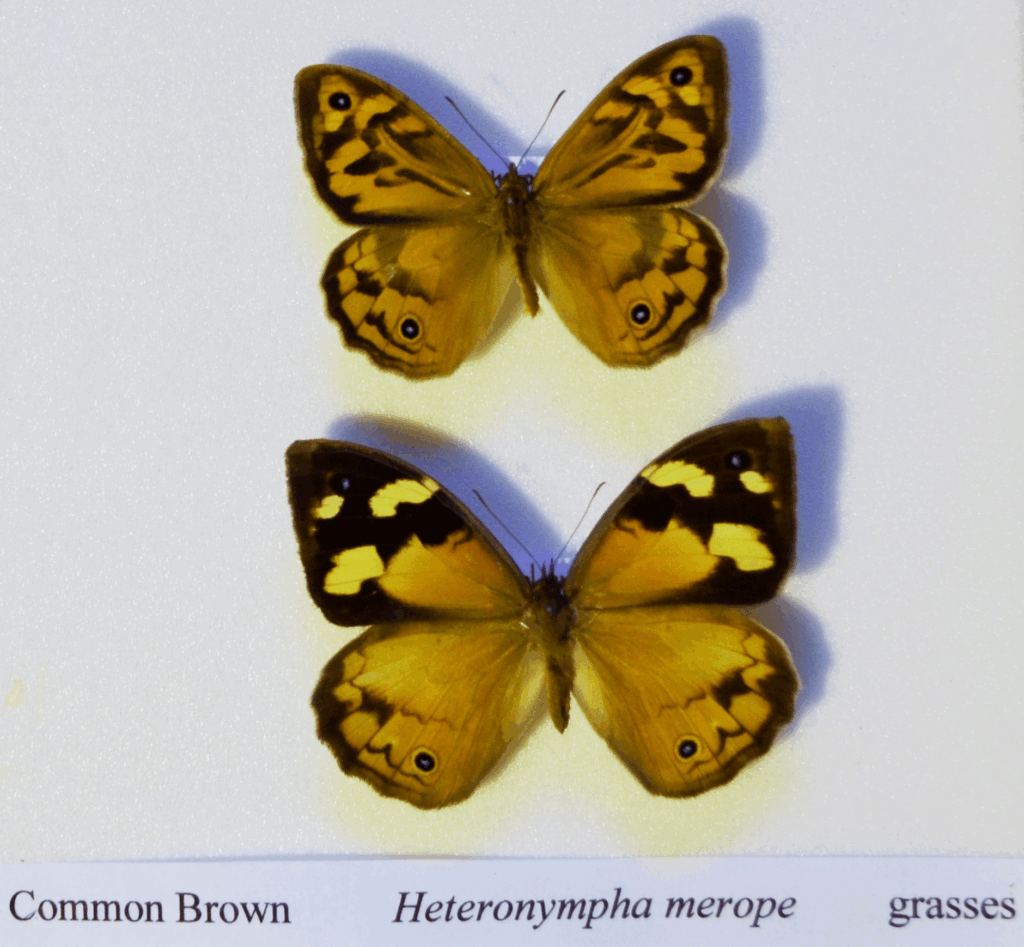
Larval Host Plants: Native grasses such as Weeping Grass (Microlaena stipoides), Kangaroo Grass
(Themeda triandra) and some tussock grasses (Poa spp.). Introduced grasses such as Panic Veldt Grass
(Erhardta erecta) and Couch (Cynodon dactylon).
Larval association with ants: None.
Adult Flight Times in Victoria: Adults have been recorded from October to May, and most commonly
from November to March. In our area males appear to be more common early in the season and females later in the season.
Conservation Status:
- The Action plan for Australian Butterflies: No Conservation Significance
- Flora and Fauna Guarantee Act 1988 – Threatened List: Not Listed
Other Notes: Males are known to hilltop. Females are generally inactive unless disturbed. This butterfly is now emerging approximately 10 days earlier than in the 1960s due to climate change effects, ref: Atlas of Living Australia.
References and further reading:
Atlas of Living Australia – Heteronympha merope, Common Brown.
iNaturalist Australia – Heteronympha merope, Common Brown.
Braby, Michael F., Second edition 2016. The Complete Field Guide to Butterflies of Australia. CSIRO Publishing.
Field, Ross P., 2013. Butterflies: Identification and Life History. Museum Victoria.